Calculating Tenant Rent
We calculate Tenant Rent as a household’s total tenant payment (TTP) minus their utility allowance (UA). You can find details on each of these below.
Total Tenant Payment
Total Tenant Payment (TTP) is the amount a tenant is expected to pay for rent and utilities based on the tenant’s income.
THA uses three tiered TTP schedules to calculate the tenant’s rent to owner, based on the tenant’s adjusted annual income and which utilities, if any, a tenant is responsible for. THA sets TTP as the highest of the following amounts, rounded to the nearest dollar:
- 28.5% of the lower edge of the tiered rent income band or
- The minimum rent allowed on the tiered rent schedule.
Example:
A tenant with an annual adjusted income of $22,000 would fall in the $20,000–$24,999 tier. To calculate their TTP, THA takes the lowest income in this tier, $20,000, and divides by 12 to produce a monthly adjusted income of $1,667. We then multiply this by 0.285 to get a monthly TTP of $475.
Utility Allowance
The Utility Allowance (UA) is an estimate of reasonable, monthly, tenant-paid utility costs, used to reduce the tenant’s rent contribution. THA has established standardized UAs based on the bedroom count. (See THA’s 2011 MTW Plan)
When assigning the utility allowance, the bedroom count depends on the voucher type:
- For project-based vouchers, the bedroom count is the unit’s actual bedrooms.
- For tenant-based vouchers, the bedroom count is the voucher size or the unit’s actual bedrooms, whichever is smaller.
When a tenant is responsible for paying utilities, THA subtracts the utility allowance amount from the tenant’s TTP. The remaining amount is what the tenant is responsible for paying to the landlord.
Examples:
A tenant with a monthly TTP of $475 rents a 2-bedroom unit where they are responsible for electricity while the landlord pays water and sewer. The utility allowance is $81, and the tenant would pay $394 in rent to the landlord ($475 – $81).
If the tenant is responsible for all utilities, the UA is $212 and the tenant would pay $263 in rent to the landlord ($475 – $212).
- (The utility allowance amount is retained by the tenant and is expected to be used to pay for tenant-responsible utilities.)
If the landlord pays all utilities, then the UA is $0, and the tenant would pay the full $475 in rent to the landlord ($475 – $0).
Payment Standard
The Payment Standard is the maximum monthly subsidy payment a housing authority can provide for a unit. It covers gross rent (rent + utilities) and determines the maximum housing assistance payment (HAP) for voucher holders.
THA sets the maximum subsidy we will pay out to a landlord as the Payment Standard minus the Utility Allowance.
If a tenant is responsible for utility payments, their TTP applies to their utility costs first, with the remainder applied to their rent. THA does not split the HAP between rent and utilities, nor does THA issue utility reimbursements.
Gross Rent & Housing Assistance Payments
A unit’s payment standard is compared to the gross rent, which is the contract rent plus their utility allowance.
THA’s Housing Assistance Payment (HAP) is equal to the Payment Standard or Gross Rent, whichever is lower, minus the family’s TTP.
Examples:
A tenant rents a 2-bedroom apartment with a contract rent of $1,500 per month and a payment standard of $1,832.
- $1,832 Payment Standard – $493 TTP ($281 Rent + $212 UA) = $1,339 HAP
- $1,712 Gross Rent ($1,500 Contract Rent + $212 UA) – $493 TTP ($281 Rent + $212 UA) = $1,219 HAP
Since the Gross Rent of $1,712 is lower than the Payment Standard, the tenant’s HAP is $1,219.
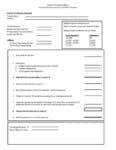
THA’s Rent Calculation Worksheet provides a step-by-step process for calculating rent to owner and HAP.
Calculating Tenant Rent for Minimum Rent Households
With minimum rents, housing authorities require that tenants make some contribution to their housing. If the calculated tenant rent (TTP – UA) falls below the minimum rent amount, the tenant is required to pay minimum rent instead.
All households with a THA voucher will have to pay a minimum rent of at least $75, or $25 for households that qualify as senior or disabled. Our tiered rent schedule shows the full range of THA’s minimum rents.
Note:
- To qualify as a senior or disabled household for the purpose of rent calculations, the tenant’s income must be 90% fixed income.
- THA developed a hardship policy designed to assist tenants who found themselves unable to pay THA’s minimum rents. (See 2011 Moving to Work Plan (Amended 2011-10-30)).
Calculating Tenant Rent when Gross Rent exceeds the Payment Standard (TBV only)
If a household has a tenant-based voucher and their gross rent is higher than their payment standard, they will have to pay the difference. This extra amount is often called the Payment Standard Difference.
Example:
Our example tenant rents a 2-bedroom house for $1,700. They are responsible for all utilities, so the UA is $212 and the gross rent is $1,912. The payment standard is $1,832.
- $1,912 Gross Rent ($1,700 Contract Rent + $212 UA) – $1,832 Payment Standard = $80 Payment Standard Difference
- $263 Tenant Rent ($475 TTP – $212 UA) + $80 Payment Standard Difference = $343 Tenant Rent to Owner
In this case, the tenant would pay $343 in rent to their landlord.